The Sea Captain

The great tales of our lives are always a matter of perspective. For example, the white-haired man I am today looks back on an excursion with the family from Seattle through the Puget Sound and on to Vancouver Island in British Columbia. We are on board a vessel carrying scores of folks. Not quite the Queen Mary but fit for inland cruising. There was wind, rain, and impressive waves, but it was altogether a cheerful and exhilarating day as we made our way along.

The old man’s memory is colored and contoured by a lifetime of other experiences, but there is still that six-year-old boy inside of me. He had never been on a ship and certainly never been anywhere near out to sea.

On that long-ago day he found himself on what seemed a mighty vessel running up through the Salish Sea and the Strait of Juan de Fuca. The geographical names mesmerize his mind and challenge his tongue. They are out of sight of land, so surely the lad is forgiven for concluding he is a mariner far out on the briny main.

At first, he is a little frightened at harsh weather. The bow of the ship pauses in the air and then falls, crashing into the waves. The boy’s mind slips easily into the role of Captain.  He looks about him. Only the experienced seamen are left on the deck – everyone else, passengers and non-essential crew have been ordered below. Many are sick. 

A beautiful lass looks over her shoulder as she is bustled below by a seaman. “What a strong Scottish captain, you are! So brave! Keep us safe!”

“He will” the sailor says, as another wave crashes down on them. “Now, below with you, girly!”

“Honestly,” thinks the tiny captain, “those landlubbers and green sailors have not seen rough seas.” His eyes are bright and his cheeks red, whether from high excitement or the wind does not matter.

He is standing at the bow of the ship, his towering helmsman holding the wheel steady just behind him. The waters rise like a mountain, then crash and fall with such weight and force the sprout struggles a bit to maintain his hold on the railing. He laughs wildly. He is covered in sea mist and his shoes are soaked through.

He spares a glance at his first mate as the next cascade of water batters them.

“Steady there,” the captain calls. “I have seen many a storm worse than this!”

“Aye! Aye!” comes the nervous reply.

The captain gives the jittery helmsman a wink. “All will be well. Just hold on to that wheel and follow my commands.”

© 2019 Carlos Declan Pharis

Kissing at the Caliche Pit

Becky Sue walked straight up to me on the playground. Without even a scratch of preamble she asked, “You want to go to the caliche pit after school and kiss?” 

To say I was surprised would understate the case dramatically. I didn’t know up to that moment a single word had ever passed between us. And it wasn’t just that this invitation was proffered by a near stranger. Kissing to that point in my life had never been high on my list of priorities. Truthfully, it had never been on any kind of list I had drawn up. 

Now there were all manner of female relatives I had kissed on the cheek as part of social protocol. I had kissed a young girl under the steps of Will Rogers Elementary when I was in the first grade. At least that is the report. I don’t have any memory of it. Nonetheless, it raised a great fuss among some of the family and all.  

My mind was not focused on kissing. I was obsessed with baseball. Thus, I astounded myself when I said “yes” to Becky Sue without hesitation. 

A word about the venue of this romantic encounter. The landscape on the Llano Estacado does not offer a lot of geographic opportunity for unobserved activity. Picture a large brown billiard table, say 37,000 square miles. There was certainly little to offer in terms of places to carry on covert activities nefarious, amorous or otherwise.  

That’s where the caliche pit came in. A geologist could explain this better, but here is something close to accurate. Caliche is a kind of rock that is useful in binding other stuff together, like gravel, sand, and clay. It has a lot of construction applications.  

There was a location pretty near the school where caliche had been dug out. What was left was just an immense hole. You could have parked a few school buses in the bottom with room to spare and you wouldn’t have seen them unless you were right up close to the pit. This pit had set there empty for a long time. Eventually the town would grow out that way, someone would buy the property, fill it in and build on it. But that day had not dawned. Around the edges of the pit desert shrubbery had taken a tenuous hold.   

So after school, Becky Sue walked me right to a spot where we could nestle up under and between two bushes. She seemed to know right where to go. I was glad. I had no clue as to how to proceed. 

We sat there a few minutes. Being protected from the sun meant a coolness settled down over us. 

Eventually I looked over at Becky Sue. Lord, I can see her yet. Dark, rich hair. Shiny green eyes. A beautiful smile.  

We leaned toward each other and I tried to perform what I thought was a kiss. We had trouble at this first attempt. First, I was a green novice right to the core. Second, a passel of leaves from a drooping limb got right there in the middle of our kiss. We both spit and laughed. Becky Sue took charge.  

We would have still been there today if she hadn’t eventually jumped up and said, “Got to get home!” She smiled and sped away, her feet flying. 

I sat there for a moment. “So, that’s what kissing is about,” I thought wondrously. 

When I walked in the back door of our place my Mother was clearly worried. “Where you been?” she barked. 

Like a fool, I instantly told the truth. “Been down at the Caliche Pit kissing with Becky Sue,” I reported and turned toward my room. 

She followed me down the hall. “My God!” she exclaimed. “Did anyone see you?” Her face was twisted up in a scowl, a picture of fear and anger. 

I wanted to report that I had not the least knowledge or concern about whether anyone had seen us, but a sense of self-preservation was dawning. “No!” I said with certainty. And I thought to myself, “Won’t be going down that trail again.” By that I meant reporting to Mother, not the part about kissing. 

Years later, when my son was born, I assume she concluded that some kissing had been involved.  But she never heard about it from me. 

© 2019 Carlos Declan Pharis 

First Day, First Grade, First Fight

On the first day of First Grade, my mother got me up. We ate breakfast. I dressed in the garments she had laid out for me. My father kissed me on the top of my head. Out the door he went to work and only moments later out the door my mother and I went to school. I liked the notion of school. I knew how to read beyond my grade level. I loved books. Besides, I had the four pennies in my pocket that were required for chocolate milk at morning recess. I loved chocolate milk.

We found the room easily enough, what with all the signage. Mrs. Tidwell was clearly a serious woman but seemed amiable enough. She directed me to a seat on the front row, which suited me just fine.

The desks were rather curious affairs. They were designed for two students., with the students seated side-by-side facing forward. The desk top would be shared. Two little cubby holes for your books and personal items were positioned under the desktop between the two seats. You took one, your desk mate took one.

I got to the desk first and was instructed by Mrs. Tidwell to put my books in the top slot and to sit quietly. Class would begin shortly. My mother waved good-bye. She wanted to kiss me, I could tell. But I had already made it clear to her in the car that this was not going to happen in the hallway of Will Rogers Elementary. Not going to happen.

There I was at my desk feeling happy and pretty good about things in general. I had a congenial teacher and had been placed right at the head of the class where I could involve myself in things. At about five minutes into my academic career, we were off to a smooth start.

The storm cloud came in the form of one Theodore Ulysses Wilcox Dorsburg, my desk mate. I don’t think we even acknowledged each other’s presence as class got started. I did not recognize him. He did not seem like the oil field and ranching stock I came from. He seemed scrubbed, groomed, and dressed for a part in an English play. My interest folded.

Mrs. Tidwell closed the door to the classroom and came around behind her desk. She gave a word or two of greeting and commenced instructions regarding what would and would not be tolerated in terms of class behavior. Then she put us straight to work by instructing us to print our first and last names on the little green index cards she passed out.

I printed my name in what I thought an exemplary manner. (It probably was. I had a pretty good hand.) Then we were instructed to put our cards at the top of the desk. She said she would be by to pick them up presently.

Theodore looked over at my card and asked in a brash manner, “What’s your name?” His accent matched his dress and appearance: too formal by half. I did not like his tone. I didn’t know this strange fellow and we hadn’t even said hello. Where did he come off asking a question wrapped in such an unpleasant fragrance?

Nevertheless, I took a shot at civility. I looked at him coolly and spoke my first name. Theodore twisted his face into a condescending grimace and said: “No, what’s your last name?”

I have almost no tolerance for arrogance, and that’s the trail Theodore launched out onto with enthusiasm. I answered him in an icy tone, “Pharis.”

“You spell your name wrong,” he smirked. “It’s supposed to be with an F. You know F as in the F sound. Fire. Get it?”

I considered this for a moment. “No, P as in Phone.”

“Crap, you are stupid,” he said with disgust and turned his head back toward the front of the room.

I remember I glared at him, wondering where he came off telling me how to spell my name. I remember Mrs. Tidwell admonished us to be quiet, and Theodore looked at her like the leading candidate for teacher’s pet.

I’ll never be sure exactly how the decision was made. All I know is that next thing, I knocked Theodore out of his chair and on to the floor with one serious whack to his jaw. The whole room froze. Theodore looked up at me in uncomprehending befuddlement. Then his head eased back onto the floor and his eyes rolled like he was a half inch from a concussion.

Mrs. Tidwell bolted from her desk and presented herself at a device on the wall between the blackboard and the pencil sharpener. She spoke into a kind of phone insisting that the vice principal and the school nurse come to her room IMMEDIATELY.

Now I am not going to pretend to you that I did not think there wouldn’t be consequences from me knocking Theodore completely out of his chair onto the floor. But Mrs. Tidwell’s reaction seemed a bit over the top to me. I had had warnings from older cousins who went to Will Rogers: do not get anywhere near even attracting the attention of the Principal or Vice Principal. And here was Mrs. Tidwell, asking for them IMMEDIATELY.

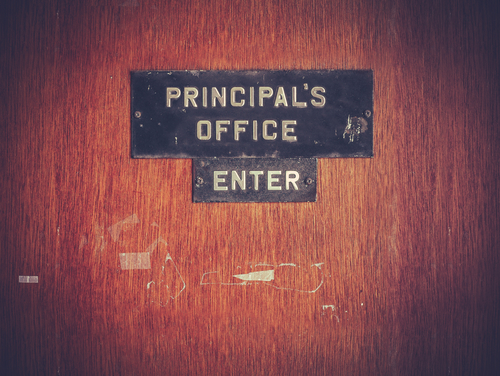
Quicker than you can say “Jack Flash” the authorities were at the door of the classroom and I was in custody, being transported to the office.  Before we left the room, Mr. Baker took note of Mrs. Tidwell’s understanding of the encounter between Theodore and me. Once we reached the office Mr. Baker asked for my rendition of events, but my explanation did not move the vice principal to think that I had a future in conflict resolution.

Very shortly, he had my father on the phone, explaining that there had been some problems with my launch into public education. Mr. Baker handed me the phone. “Your Father wants to talk to you” he said.

I got on the phone and Dad said “Jiminy Christmas, your mother dropped you off at school at 8 a.m. this morning, and I’m getting a call from the principal’s office at 8:15. This is not a good start.”

What was I supposed to say? I knew it wasn’t a good start. I also knew I couldn’t and wouldn’t take crap from buffoons like Theodore Ulysses Wilcox Dorsburg. I didn’t say this. Instead, I said, “Yes sir.”

He took a breath. He asked if I had done what Mr. Baker reported.

“Yes, sir.”

He informed me that I would take whatever punishment that would be forthcoming.

“Yes, sir.”

Fortunately, Mr. Baker concluded that he would give me a pass, since it was just the first day of school. He allowed that he would speak with Theodore too, and that we both had some settling in to do. He made it very clear that this was a one-time pass on punishment.

At supper my mother cried and wailed about how her reputation as a mother had been ruined by my behavior.

My father was a bit more pragmatic. “Son,” he said sternly, “life is going to be a rocky road if you have to deck every fellow who is less than civil to you.”

Falling Rocks

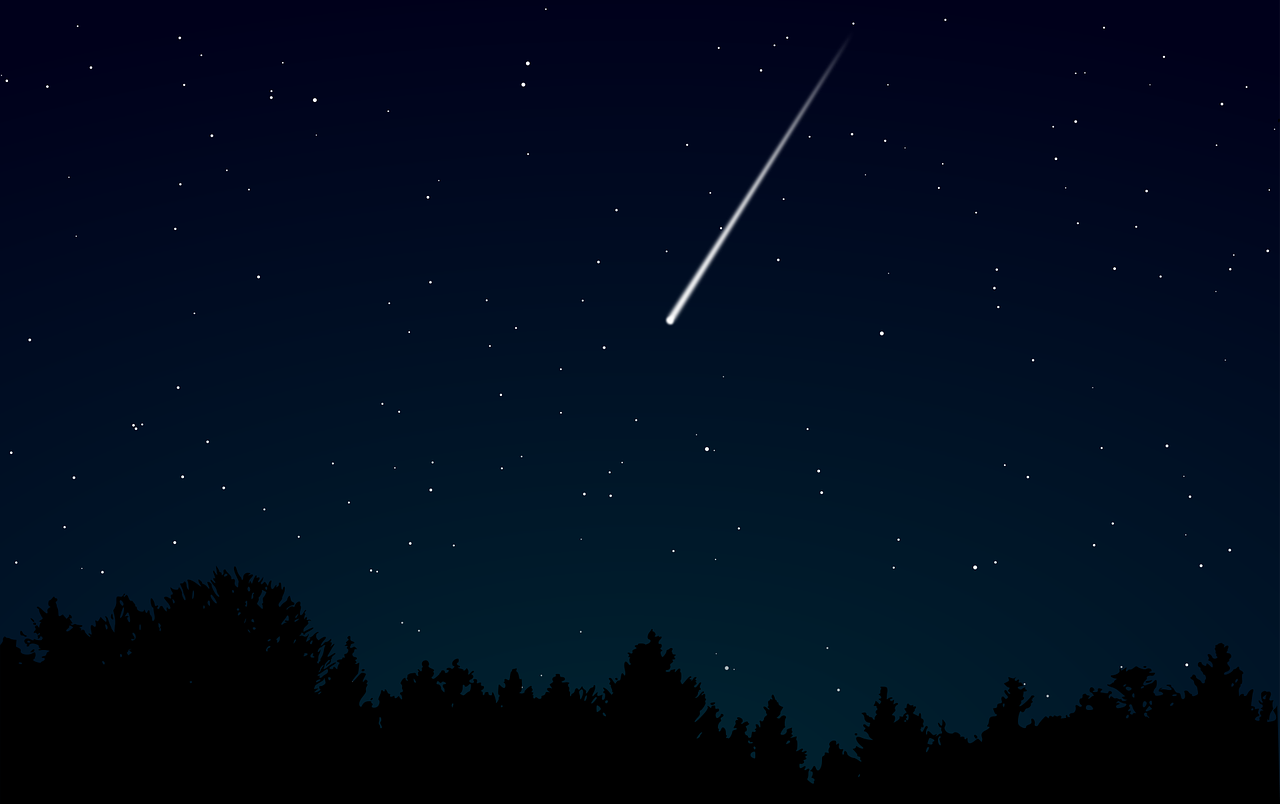
Meteor

As a boy, I spent my summers on a farm in Knox County, Texas belonging to my Uncle Charles and Aunt Gladys. There were many reasons I loved being there, but one of my favorite reasons was that we slept outside under the stars with some regularity. It was really hot in the summer, and the house never seemed to cool off. We slept in the yard to soak up enough coolness to be able to face the next day. It was practical.

For a boy like myself it was also an adventure. It was something different. It felt just a little dangerous out there in the wide open. And the stars were really, really pretty. Actually, I looked for almost any excuse to curl up outside.

Another reason I loved the farm was that my aunt and uncle subscribed to National Geographic. They saved back issues for me all year, and I loved digging through them. I would be engrossed in the wonderful maps for hours.

Of course, from time to time there would be an article about some faraway tribe replete with photographs featuring females who did not wear clothing covering the top half of their bodies. Of course, I took care that I was not seen examining these articles and attendant photographs. Of course, I always advertised that my sole interest in the periodical was the maps and the scientific content.

And it was true that I was fascinated with maps. And I did find the scientific content very interesting.

But I had committed an outright act of dishonesty by denying any knowledge of the semi-nude photographs. Lying and lusting. I knew I had an express ticket to hell. I had no intention of repenting. Really, I was going to hell.

This particular summer, I was perusing my favorite magazine when it was suddenly there in black and white. I read the words again to see if I had it right. Yep.  I had. It was true. It was a warning from National Geographic, and we all know this is a periodical to take seriously.

Apparently, the possibility existed that a person somewhere on the planet could actually get killed by a piece of meteorite that failed to burn up in the atmosphere. The odds were infinitesimally small. I mean, just barely in the range of possibility. But that’s all it took for me. I was off to the psychiatric races.

The article made it clear that I would not hear it coming and I may not be safe unless maybe I was in the bottom of Carlsbad Caverns. Basically, I could be just minding my own business and with no hint of warning an errant piece of rock could shoot down out of the sky faster than a freight train and kill me deader than dirt. There seemed to be no escape.

A few weeks later, Uncle Charles declared it a night for sleeping outside. All of the bedding was prepared and they were settling down when he asked where I was. I could hear him through the open window to my room, and I froze. I had been planning  on staying inside.

Aunt Gladys reported that I was not coming outside because I was afraid I would get hit by a meteor.

Uncle Charles, a farmer and engineer, a WWII veteran, intelligent and practical, pondered for a moment.  “Well that is kind of silly,” he said. “That roof wouldn’t even slow a meteor down.”

“Charles Amos,” Gladys hissed. “Really. You know how he is!” And I could hear that she was making for the house to check on me.

I was beyond horrified. I was about to panic. I gathered up my pillow and blanket. We met at the door. She saw me, my eyes wild. She stopped, held the door and let me pass.  I went straight to the cellar in the backyard we used for shelter from tornadoes.  It is where I slept for most of the rest of the summer.

I was going to hell for lying and lusting, and now I was certain the tool God was going to use was a confounded meteor.  But I wasn’t going to make it easy.

Fifteen Cents

Tom’s Store was right on the edge of town, where the dirt roads ended and paving appeared. It was a fair trek on foot.  Looking back, it seems remarkable that my mother would let me traipse off that far by myself. But truly, the worst that could happen was that I might come across a rattle snake, and I knew how to be wary of such critters. Occasionally a car or truck would come down the dirt road, and invariably it would be someone I knew. I thought I was hiking off to New York City.

The only thing that cast anything close to a shadow on going to Tom’s Store was dealing with Tom himself.

Tom was tall and thin. His face was craggy, lined and leathery. His hair was dark, wavy, flecked with gray, and he combed it straight back. He always reminded me a little bit of what I thought Abraham Lincoln’s evil twin brother would have looked like if he had had one.

Tom never smiled, never laughed, and absolutely never participated in small talk with kids. I observed him interacting with adult customers in his store from time to time, and his expression softened as he exchanged bits of conversation. I had long concluded that Tom thought childhood was a waste of time and ought to be skipped altogether.

His dour attitude became exceptionally apparent if a youngster came up to the counter to pay for something and was even a penny or two short. Now, if your parents had called ahead and authorized the purchase Tom would just ‘write it on the wall,’ as they used to say. Your folks would take care of it later.

But if you were a sprout buying what was clearly kid stuff, like a cola or a chocolate bar, well, then if you came up short, you just came up short. Tom wasn’t writing anything on the wall. Your soda went back in the cooler and the candy bar returned to the shelf. That was the end of the story. Very humiliating. I’d seen him do it. Consequently, I never went into the store without being certain I had the money to cover my purchase.

It was a small store. When you walked in the door, the check-out counter, behind which Tom was always seated, was to your left. After coming through the door, you could either walk straight ahead down the aisle that presented in front of you, or turn left, walk toward Tom a few steps, and turn right to pass down the one double shelf that ran the length of the store. In addition to Tom, the coolers lined the far-left side of the store.

A lot of my buddies would go in and proceed straight down the aisle in front of them. They would go all the way to the end of the store and double back around to the cooler. They would pick up their soda and then present themselves to Tom to pay out. This meant they had to deal with being close to Tom only once.

I could understand this. There was something about being real close to Tom that was intimidating. You could feel the beam of his eyes on you the whole time you were in the store. The closer you got, the more his eyes kind of made your insides jiggle. But he seemed to give the kids who avoided him an extra fierce and disdainful gaze that I didn’t like. He would tilt his head ever so slightly to the right as he watched them cut a wide berth around him.

On the other hand, when I came through that door, turned left, went straight toward him, and then turned right in front of him, he wouldn’t tilt his head to the side. He would just look straight at me and nod ever so slightly as I went by. I’m not saying it wasn’t scary, but it felt a little better. More respectful.

One day I walked through the front just like usual. The little bell attached to the top of the door jingled out an alert. He looked up and, predictable as the rising sun, fixed his eyes on me as I approached. I met his gaze. He nodded.

The issue occupying my mind at that moment was whether to add a Dreamsicle to my intended purchase of an RC Cola. I finally decided that the RC was enough. I was going to amble over to the park after my stop at Tom’s. Toting along an ice cream bar in one hand and a soda in the other seemed a challenge to my main goal: to look cool.

I put my soda on the counter and went for my change to pay up. Tom didn’t say a word. He knew that I knew how much the soda was. I got my coins out and handed them to him. He said, “Thank ya,” and hit the keys on the old register. The door popped open and he dropped in the money.

Suddenly, I got focused on a dime and a nickel laying out there on the edge of the counter, a little off to the side and out of Tom’s view. Fifteen whole cents!  In 1958, that was an amount worthy of some note. I was frozen with indecision for a moment.

When Tom looked up from closing the cash register, I was still standing there. He seemed a little surprised. And just like that, I knew what to do. I pointed with my index finger toward the coins.

“There’s some money there,” I said. “It isn’t mine.”

Tom leaned forward a bit and looked at the coins. Then he looked back at me.

“See ya,” I said, turned and went out the door.

The next little while, whenever I came in Tom’s Store, things were just like they always were, and he was just like he always was. Our exchanges at the counter were sparse and direct.

Finally, a day arrived when, despite my caution about never coming into the store without the necessary funds, I did just that. I got to the counter with an RC Cola and Snickers bar, put the items on the counter, reached in my pocket, and instead of encountering metal, found nothing but the soft cotton of my jeans pocket. Quickly I reached over into my left-hand pocket. I knew that was no use though. I would never put money there. I also checked my two back pockets and the pocket on my t-shirt. Nothing. Now I could see the money lying on the top of my chest of drawers.

I took a sigh, and collected the soda and the chocolate bar to return them to stock. Tom had been watching me as I went through all this pocket grubbing. “Change your mind?” he asked as I pulled the items towards me.

“No. Don’t have my money. Left it on the dresser.”  I now had the soda in one hand and the Snickers in the other. I was a couple of paces from the counter headed back for the cooler and the candy case.

“Hold on there,” Tom commanded. I froze. “It’s pretty hot out there. You look a little wilted. Go ahead and take that soda. The candy too. Give you a little energy.”

I turned and stared at him dumbfounded. “But I don’t have any money with me,” I stammered.

“I heard you.” And he scowled a little. “You owe me 27 cents. Bring it by next time you come down the road.”
 

Interesting

Encyclopedia Blurred

I was sitting at the dining room table munching on my after-school snack when I noticed a collection of boxes sitting just inside the front door against the wall.

My mother looked up from the kitchen and caught my gaze. “You looking at those boxes?”

I allowed that I was.

“Just something your Daddy ordered,” she said. She waved her hand dismissively and moved on, opening the refrigerator to get something.

I puzzled on the mystery of what was in those boxes. After a minute or so, my Mom left the kitchen. I seized the unsupervised moment to hop down from my perch at the table and inspect the cartons.

The boxes were made of thick cardboard. They were heavy. I tried to push one with my foot and it didn’t budge. Unusual.

I felt my Mom’s gaze. She was standing in the dining area looking at me with a dish towel in her hand. “You through with this?” she asked, pointing at the barely nibbled snack and the half empty glass of milk I had left on the table.

“Yes, ma’am” I said.

“Then get it on to the kitchen” she commanded. “And stop fidgeting about those books.”

She started back toward the kitchen.

“Books?” I exclaimed. “What kind of books?”

“It doesn’t matter a lick,” she threw over her shoulder. “They’re your Daddy’s business and they don’t concern you or me.”

As I settled at the breakfast table the next morning, my father cleared his throat and produced a good-sized brown book from his lap. He opened it up, considered the page, and pronounced with some gravity “Aardvark.”

My mother stopped dishing food. “Bill, if we are going to read at breakfast it ought to be something from the Bible.”

He gazed at her with a pleasant expression over the top of the big brown book he held open in his hand. “Darling, we have a preacher that is paid, not well, but paid to teach us from the Good Book. I’ll wager…. well, maybe I shouldn’t bet on it…. but I am thinking that he is better trained to direct our religious education than I am.”

He said this with an air of satisfaction and returned his gaze to the book. It was clear to me that he felt the issue settled.

I looked at my mother to see what her take would be.

“Excuse me,” she said flatly. “I’ll be feeding the boy and myself. We’ll save you some for when you are through holding your encyclopedia class.” She proceeded to load my plate with scrambled eggs, bacon, and biscuits slathered with a big ladle of red-eye gravy.

My father seemed content with this and proceeded once again: “Aardvark.” When he was through reading the entry he closed the book, looked at me and said, “Now that was interesting.”

Dad gathered up his food, and the two of us proceeded to eat. Mother was ahead, but we caught up quickly.

Thereafter, an encyclopedia reading was added to our morning routine. And it was, just as he declared, interesting.


Hammered Toe

At the time, I was a very small tyke, just walking and speaking. There was a uniform of the day I no doubt had on: a jumper that buttons up on the shoulders, maybe with a little t-shirt underneath. The sartorial package came with a cotton diaper and plastic wrapper that created a big bulge all around my bottom. It was completed with a pair of little white lace-up shoes that my mother polished freshly every day.

The eye-witness report of these events comes courtesy of my Grandmother Vinnie, who was there with us for one of her extended stays. She was sitting in the living room and watched the scene unfold.

My Dad entered the living room, intent on connecting with the newspaper and his cup of coffee. Upon sitting, he liked to get out of his shoes and into a pair of house slippers. Sometimes, especially in the summer, the house slippers did not get on for a while. They just sat there beside his feet while he drank his coffee and read the paper. Above all, he was not to be disturbed.

Enter me.

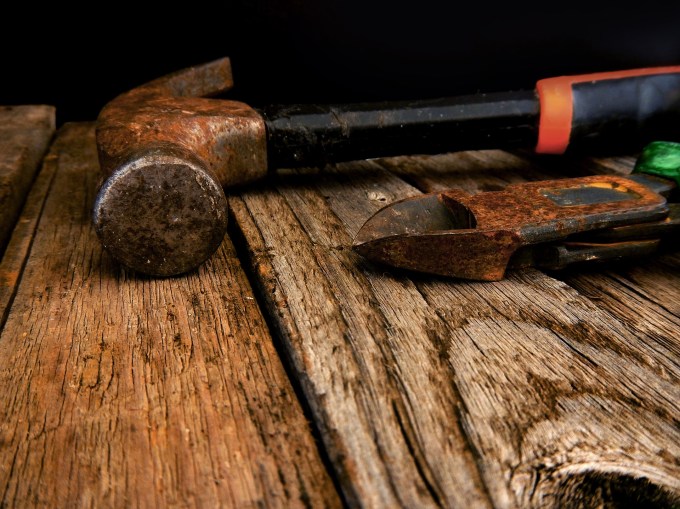
I acquired his hammer from where he had left it with all his other tools at the back door – a common place for him to drop them on his way in. Given that adults in my life only intervened on my activities if I was going to hurt myself, no one paid much attention to me dragging my Dad’s hammer about the place.

Eventually, I approached my Father, and announced rather matter-of-factly: “Daddy, I’m gonna hammer.”  To this piece of information, he responded with the kind of parental grunt given children when an audible response is called for but the energy or interest to get meaningfully involved is missing.

I looked around for something to hammer. With my one free hand, the other being used to hold my trusty tool, I patted my Father’s knee, disturbing his paper only the slightest. I asked with the kind of rational tone only a child can use when asking a completely bizarre question: “Can I hit your toe with this hammer?”

Now look, I don’t have a clue as to why, among all the things in the room I might have chosen to take a whack at, his toe represented to me the most likely candidate. A Freudian analyst would blather something about my sense that I had taken back seat to the news of Lea County and that I wanted to reassert my position as the only appropriate object of affection.  When I asked my Grandmother about it years later, she simply said: “Well, you know, little children do things like that.”

At any rate, it did register on my Father that a question had been posed to him.  He made one feeble attempt to join the conversation.  “What son?” he mumbled from behind his paper.

“Can I hit your toe with this hammer?” I repeated.

It is at this moment he made the error parents have been making in similar situations for years untold. Truthfully, he just wanted me to leave him alone, so he could go on reading the paper. His cup of coffee had been thoughtfully refilled by my Grandmother and he was fully engaged in the news. And so, he said, “Sure. Sure, son.”

I’m sure some of you are wondering why Grandmother didn’t intervene. I asked her myself. To her mind, the conversation between my father and me did not concern her in the least. The child was not in danger, and surely a man who had fought Hitler’s SS Units in Europe was not threatened to any great degree by a little boy barely able to walk, even if he was dragging a hammer behind him.

Having requested and been given permission to strike my Father’s toe with the hammer, I grasped it with my two chubby hands, lifted it, and let it go. Gravity did most of the work from there. And the head of that hammer hit his toe as precisely as my mother threading a sewing needle.

My Father bolted out of his chair like he had been shot with electricity. The coffee cup flew to his left and the paper rained down across the living room. He made loud and quite unintelligible sounds. (My mother seemed to have understood some of the words because I heard her later tell him he shouldn’t use such language in front of me.)  He hopped around a bit, which I thought was funny.

My Father did not think any of this was funny. When the pain subsided some and he got composed a bit, he made a grab for me. It was at this point my Grandmother concluded that she had a legitimate reason to be involved.

Grandmother leaned forward in her chair and said in an assertive voice: “Bill.” She had to repeat herself because my Father had a serious head of steam built up. “Bill!” she said again a little louder.

He stopped and looked straight at her. He had me dangling from one arm, with the offending hammer laying just out of my reach on the floor.  He gave my Grandmother direct attention.

“Bill,” she said, in a gentler tone now, “you told the boy he could do that.”

His gaze was incredulous.

“The child asked if he could hit your toe with that hammer.”  She pointed toward the carpentry implement that I was still eyeing.  “And you told him it was ok.”

“Well,” he blustered out and then let it trail off.  Finally, he said, “Well, Lord, I didn’t mean it.”

He let me back onto the floor. I sat down on my fully cushioned rump and began to handle the hammer with both hands.

My Father stepped away a couple of feet.  “I guess I wasn’t really listening to him.” He peered at Grandmother hopefully.  “I mean, did he really ask me?”

“I’m afraid so,” she said.  “I’m afraid so.”

The damage to his toe was not permanent, but the incident changed the way we communicated forever.  From then on, whenever I posed a question or wanted his attention in any way while he was having his alone time, the paper came down from his face immediately.

“Yes, Son?” he would say, and gaze at me intently.

Sandstorm

I was sitting on the floor looking up at my mother. She was standing in front of the kitchen sink wringing out a wash rag from a pan of water. She bent down and started wiping my face, digging into my ears and nose with the cloth.

I pulled back a bit. She was sure tending to her cleaning chore with a lot of energy.

“Hold still,” she said. “You’ve got enough of the Llano Estacado in your nose and ears to grow a small garden. You wouldn’t want a tomato plant to start growing  out of your ear would you?”

“No, Momma, I wouldn’t,” I said, completely horrified by the thought.

I looked over her shoulder as she resumed working on me. We were in the middle of a sandstorm. The sun was high, but the sand was so thick the sun didn’t so much stream through the kitchen window as ooze through it. The light was a dull yellow. I could hear the wind whistling around the window and the sand pelting against the house.

The sand hung in tiny particles in the air in the kitchen. It was still inside the house and a bit stifling.

Satisfied that I was momentarily safe from being the breeding ground for vegetation, my Mom stepped back and rinsed out the rag. Then she bent down and folded the cloth over several times.

“I know it’s pretty close to wet,” she said. “But hold it over your mouth and nose and breath through it. It’ll keep the sand out of your lungs.”

She smiled and left me on the floor, returning to her work at the sink.

I held the cloth to my face and breathed through it. It did keep the sand out. It was cool and soothing.